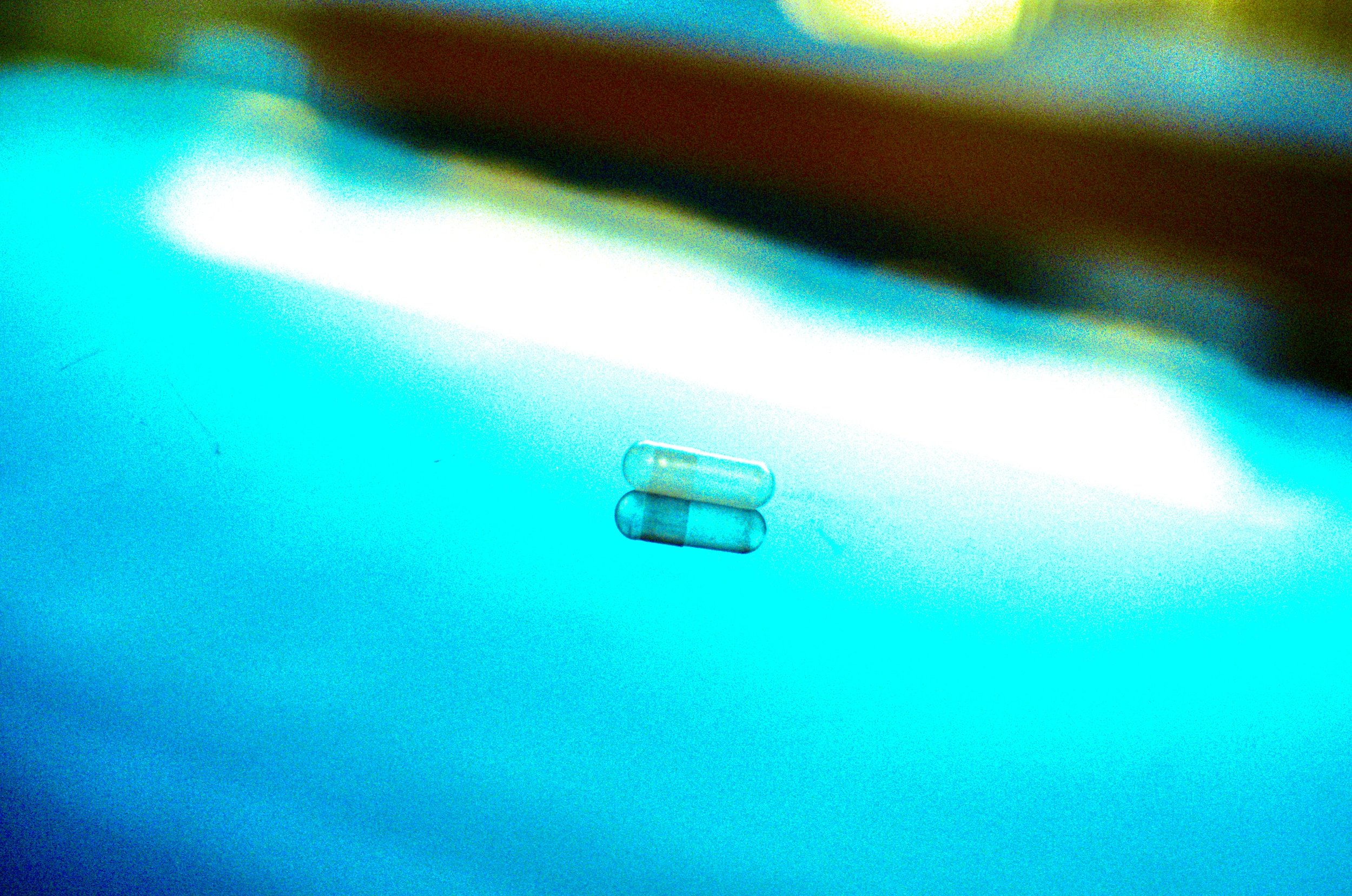
Utterly addicted to the invisible drug
Best taken with nothing. No water to wash it down. Because it is nothing. No pill. No liquid.
And, to call it a drug raises TGA eyebrows. But if Default Mode Network activity drops by roughly 20–40%, quieting rumination¹–³; if the method resembles Mindfulness-Based Cognitive Therapy (MBCT)—a clinical protocol built on sustained attention to breath, bodily sensation, and present-moment awareness, with robust evidence for psychological benefit⁴—then, functionally, it certainly behaves like one.
We strip it of virtue. Of incense, temples, mantras, Hollywood Hills cliques. Not dismissively, but to sample it in its purest form. No music. No guiding voice. No watch or phone to clock it. For the undiagnosed ADHD mind is time illiterate. So we step outside it. The head empties. Thoughts rush in to fill the gap. We negotiate them away. And after some indecipherable interval, we may find ourselves smiling—without knowing why.
Maybe it’s the rapid increase in striatal dopamine availability, rising by ~60–65% during certain meditation states, according to PET imaging—exceeding that seen with nicotine or caffeine⁵. Or the serotonergic signals that stabilise mood and emotional regulation⁶. Perhaps is endocannabinoids like anandamide that restore bodily ease and interoceptive calm⁷. It could be Norepinephrine could be upping alertness without agitation⁸, while cortisol drops by ~10–25%, easing stress reactivity⁹.
Whatever the cause, the effect is surprisingly acute. A high. Comparable, in feel if not in form, to other highs we’ve known. And when the full dose is felt we return to our absurd earthly existence with unusual clarity, calm, and focus. Dropping and shattering an expensive vase feels like placing white flowers on soft earth.
And we think about other drugs that promise the same outcome. Methylphenidate, with stronger short-term behavioural gains, but parity longer-term outcomes and limited evidence of durable neuroplastic change¹⁰. We don’t dismiss pharmacology. We see its utility. But we have many questions about the potential sides, what it reshapes, and what it merely props up.
And then, the next morning, what should feel like effort becomes oddly irresistible. Because it asks little. Because the nucleus accumbens remembers. It wants the hit. The fix.
The door eases open. We come and go as we please, for as long as we like. And we wonder if we’re—quite possibly—
utterly addicted to the invisible drug.
References
Brewer JA et al. Meditation experience is associated with differences in default mode network activity and connectivity. PNAS. 2011.
Garrison KA et al. Meditation leads to reduced default mode network activity beyond task effects. Frontiers in Human Neuroscience. 2015.
Fox KCR et al. Functional neuroanatomy of meditation: A review and meta-analysis. Neuroscience & Biobehavioral Reviews. 2014.
Segal ZV, Williams JMG, Teasdale JD. Mindfulness-Based Cognitive Therapy for Depression. Guilford Press. (Foundational clinical framework + evidence base).
Kjaer TW et al. Increased dopamine tone during meditation-induced change of consciousness. Cognitive Brain Research. 2002.
Young KS, Taylor E. Meditative states and serotonergic modulation of mood and affect. Progress in Brain Research. 2019.
Streeter CC et al. Effects of yoga and meditation on GABA and endocannabinoid systems. Medical Hypotheses. 2012.
Tang YY et al. Short-term meditation training improves attention and self-regulation. PNAS. 2007.
Pascoe MC et al. Mindfulness mediates cortisol reduction: A systematic review and meta-analysis. Health Psychology Review. 2017.
van de Weijer-Bergsma E et al. Mindfulness training versus methylphenidate in children with ADHD: A randomized controlled trial. Journal of Child Psychology and Psychiatry. 2012.